
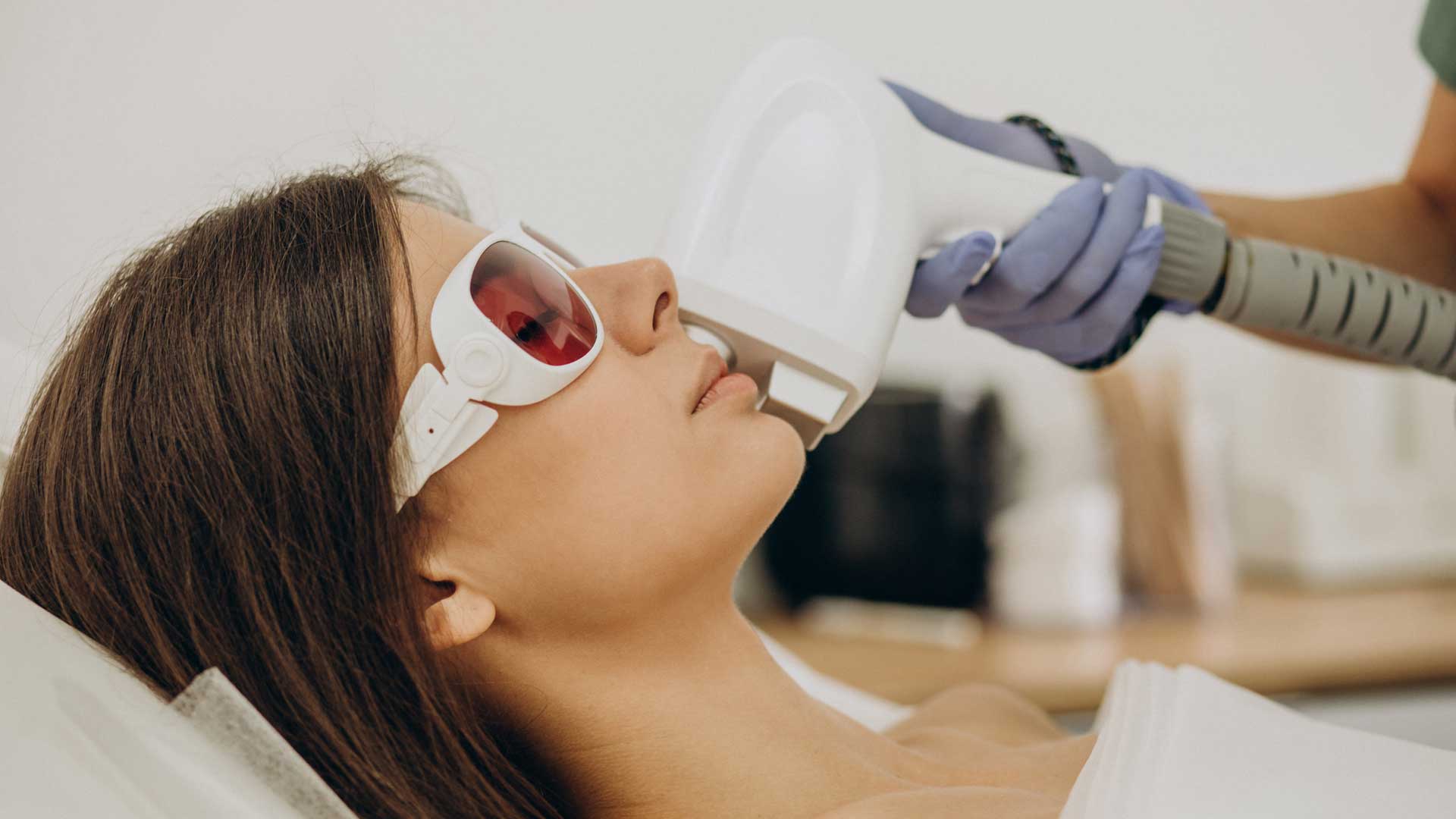
A long-pulse Nd laser is an advanced solid-state laser system that operates at a wavelength of 1064 nm. Unlike Q-switched lasers, which deliver energy in nanosecond pulses and are commonly used for tattoo removal, long-pulse Nd lasers release energy over a period of milliseconds. This extended pulse duration allows the laser to penetrate deeper into the dermis, heating targeted structures while helping to protect the skin’s outer surface.
Primary Medical and Aesthetic Applications
Vascular Lesions and Leg Veins:
The 1064 nm wavelength is suitable for targeting deeper blood vessels due to its interaction with haemoglobin. Long-pulse Nd lasers can be used to treat various vascular concerns, including telangiectasias (broken capillaries), certain haemangiomas and leg veins measuring up to approximately 3 mm in diameter. Treatment suitability depends on the characteristics of the lesion and the individual’s skin.
Laser Hair Removal for Darker Skin Tones:
Long-pulse Nd technology is widely used for hair removal on darker skin types, including Fitzpatrick skin types IV–VI. Its longer wavelength penetrates deeper into the skin and is less strongly absorbed by epidermal melanin than shorter wavelengths. This can help reduce the risk of burns and post-inflammatory hyperpigmentation when compared with less suitable laser systems. Appropriate settings, cooling and professional assessment remain essential for safe treatment.
Skin Rejuvenation:
Long-pulse Nd lasers can also support non-ablative skin rejuvenation. Controlled thermal energy delivered into the deeper layers of the skin can stimulate collagen remodelling and new collagen production. Over time, this may help improve the appearance of fine lines, wrinkles and certain skin-texture concerns without deliberately removing the skin’s surface layer.
Wart Treatment:
In selected cases, Nd laser treatment can be used to address persistent warts by targeting the blood vessels that supply the affected tissue. Reducing this blood supply can help the lesion resolve, although results vary and treatment should be selected according to the wart’s location, size and characteristics.
Key Benefits and Safety Considerations
Deep Tissue Penetration:
The 1064 nm wavelength allows energy to reach deeper structures, making the technology useful for targeting hair follicles and subsurface blood vessels that may be difficult to treat with shorter-wavelength systems.
Reduced Epidermal Melanin Absorption:
Compared with shorter wavelengths, 1064 nm light is less readily absorbed by melanin in the epidermis. This makes long-pulse Nd lasers a valuable option for treating darker skin tones, although the risk of adverse effects is not eliminated entirely.
Advanced Skin Cooling:
Many modern laser platforms incorporate cooling technology to help protect the skin’s surface during treatment. Some systems also use Multiple Sequential Pulsing (MSP), which divides energy delivery into controlled pulses to help manage heat build-up and improve treatment comfort.
Temporary Side Effects:
Common short-term reactions may include mild discomfort, redness (erythema) and temporary swelling. Depending on the treatment area, laser settings and individual skin characteristics, other effects may occur. A thorough consultation, appropriate device settings and suitable aftercare are important for minimising risks.
Understanding Laser Pulse Duration in Hair Removal.
Long-pulse laser hair removal uses laser energy delivered over a longer pulse duration to target hair follicles effectively. These lasers can penetrate deeper into the skin, making them particularly suitable for treating thick, coarse hair and follicles located beneath the skin’s surface.
Long-pulse systems often use wavelengths designed to reach deeper tissue layers while targeting melanin within the hair follicle. Certain wavelengths, such as 1064 nm Nd, are particularly useful for treating darker skin tones when the appropriate settings and safety protocols are followed. By directing energy towards the follicle while protecting the surrounding tissue, long-pulse technology can help reduce unwanted hair across a variety of treatment areas.
Understanding Short-Pulse Laser Techniques
Short-pulse laser hair removal delivers energy in shorter bursts, allowing practitioners to adjust how energy is transferred to the hair follicle and surrounding tissue. Depending on the wavelength and treatment settings, these systems may be suitable for particular hair types and treatment requirements.
Alexandrite lasers operating at 755 nm are commonly used for hair removal because melanin absorbs this wavelength efficiently. They can be effective for treating coarse and dark hair, particularly on lighter skin tones. However, finer or lighter hair can be more challenging to treat because it contains less melanin, which is an important target for laser hair removal.
It is worth noting that pulse duration alone does not determine which hair types a laser can treat. Wavelength, energy settings, skin tone and hair characteristics all influence treatment suitability and results.
Comparing Long-Pulse and Short-Pulse Laser Hair Removal
Effectiveness for Different Hair Types
Choosing between long-pulse and short-pulse laser hair removal requires an understanding of the individual’s hair characteristics, skin tone and treatment goals.
Long-pulse lasers can be particularly effective for treating coarse, deeply rooted hair. Their ability to deliver energy over a longer duration can help transfer heat to the follicle while allowing practitioners to tailor treatment settings to the client’s needs.
Short-pulse techniques may be useful in situations where a shorter energy delivery is appropriate for the selected laser system and treatment area. However, their effectiveness depends on the wavelength, fluence and pulse duration used rather than pulse length alone.
The most suitable approach will depend on the client’s individual characteristics and the technology available. A professional assessment helps determine which laser system is most likely to deliver effective, consistent hair reduction.
Safety and Potential Side Effects
Safety is a key consideration when performing laser hair removal. Although both long-pulse and short-pulse systems can provide effective results, treatments must be adapted to the client’s skin tone, hair type and treatment area.
Long-pulse Nd lasers operating at 1064 nm are often preferred for darker skin tones because this wavelength is absorbed less strongly by epidermal melanin than shorter wavelengths such as 755 nm. This can help reduce the risk of unwanted skin damage when the device is used correctly.
Laser hair removal can be performed on a range of body areas, including the underarms, legs and bikini area. However, sensitive areas require appropriate equipment, carefully selected settings and a trained practitioner.
Potential side effects include temporary redness, swelling, discomfort and changes in pigmentation. Burns and blistering can occur if treatment is unsuitable for the client’s skin or performed incorrectly. Shorter-pulse systems may also be appropriate for some clients, but their safety depends on the complete treatment parameters rather than pulse duration alone.
A thorough consultation, appropriate eye protection, suitable cooling and adherence to the manufacturer’s instructions are essential for minimising risks.
Technological Advancements in Laser Hair Removal
Innovations in Long-Pulse Laser Technology
Advances in long-pulse laser technology are giving practitioners greater flexibility when selecting treatment parameters for different clients. Modern systems may offer adjustable energy levels, pulse durations, cooling options and multiple wavelengths to accommodate a broader range of treatment requirements.
For example, the Quantum LASE machine combines 755 / 808 / 1064NM wavelengths, providing professionals with options for treating different skin and hair characteristics. The 755 nm wavelength is strongly absorbed by melanin, while the 1064 nm wavelength offers deeper penetration and is often better suited to darker skin tones.
These features allow practitioners to tailor treatments more precisely, with the aim of improving hair reduction results while maintaining client comfort and safety. Actual performance will depend on the device specifications, operator training and appropriate treatment settings.
Innovations in Short-Pulse Laser Technology
Developments in laser hair removal have also focused on improving versatility, treatment speed and client comfort. Modern equipment may incorporate adjustable pulse settings, enhanced cooling systems and multiple wavelengths to help practitioners accommodate different skin types and treatment areas.
Some systems combine 808 nm diode laser technology with intense pulsed light (IPL), offering additional treatment options within a single platform. Diode lasers deliver light at a specific wavelength, while IPL systems use a broader spectrum of light. These technologies work differently and should not be considered interchangeable, but combining them in one device may provide greater flexibility for aesthetic businesses.
The continuing development of laser and light-based equipment is helping clinics and salons expand their treatment offerings. Selecting the right device still requires careful consideration of its technical specifications, safety features and suitability for the intended client base.
Choosing the Right Laser Hair Removal Technique
When comparing long-pulse and short-pulse laser hair removal, practitioners should consider several important factors:
- Skin tone: Different wavelengths interact with epidermal melanin in different ways. Selecting the appropriate technology is particularly important for clients with darker skin.
- Hair colour: Laser hair removal generally works best on pigmented hair. Blonde, white, grey and some red hairs may respond poorly because they contain less of the melanin targeted by conventional systems.
- Hair thickness: Coarse, dark hair often responds well to laser treatment, while fine hair can be more difficult to treat.
- Treatment area: Hair density, follicle depth and skin sensitivity vary across the body, so treatment settings may need to be adjusted accordingly.
- Client comfort: Cooling technology, pulse duration and appropriate energy settings can influence the client’s experience during treatment.
- Device capabilities: Wavelength options, adjustable parameters, safety features and manufacturer support should all be considered when selecting professional equipment.
Rather than choosing a laser based solely on whether it uses long or short pulses, practitioners should evaluate the complete technology and its suitability for the clients they intend to treat.
The Importance of Professional Consultation
Consulting a suitably trained and qualified laser practitioner is an important step before beginning treatment. A professional assessment can help identify the most appropriate wavelength, pulse duration and energy settings based on the client’s skin tone, hair characteristics and medical history.
Practitioners should also explain the expected treatment schedule, potential side effects and limitations of laser hair removal. A patch test, where recommended by the device manufacturer and applicable treatment guidance, can help assess skin response before proceeding with a full treatment.
By combining professional expertise with appropriate equipment and individualised treatment planning, clinics and salons can provide a safer and more effective service.
Supporting a Versatile Aesthetic Business
Investing in suitable laser hair removal technology can help clinics and salons broaden their treatment portfolios and respond to a wider range of client needs. When comparing equipment, businesses should consider wavelength options, pulse-duration controls, cooling systems, training, maintenance requirements and manufacturer support.
EmTECH aims to provide equipment options that enable aesthetic professionals to tailor their services to individual clients while prioritising treatment quality, comfort and safety.
By understanding the differences between long-pulse and short-pulse techniques, practitioners can make more informed decisions about the technology they use and the treatments they offer. Choosing equipment based on its full technical capabilities, rather than pulse duration alone, is an important step towards delivering effective, personalised laser hair removal services.
Discover Our Hair Removal Equipment
EmTECH offers a range of professional laser hair removal devices designed to support the needs of aesthetic clinics, beauty salons and other qualified practitioners. The product range includes systems incorporating different wavelengths and technologies, allowing businesses to evaluate equipment according to their treatment objectives.