
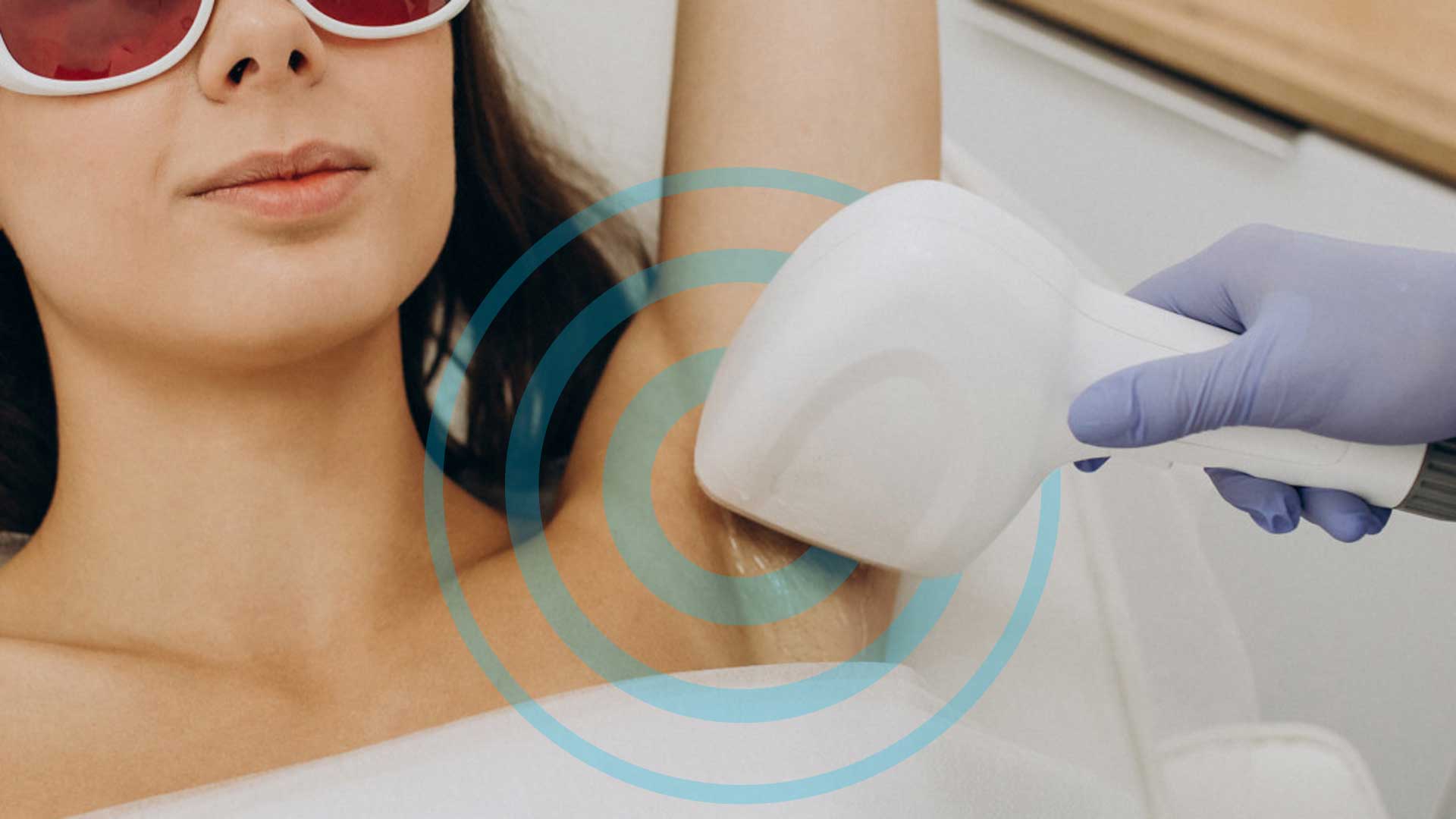
In professional aesthetic laser systems HSPC stands for Heat-Sink Parallel Contact cooling. While traditional contact cooling relies on passive chilling elements or one-off “bursts” of temperature reduction, HSPC Contact Cooling represents an advanced, continuous thermal management system integrated directly into the laser handpiece.
HSPC is considered superior in laser hair removal due to the following specific clinical and structural advantages:
1. Range-Controlled, Continuous Temperature Stabilisation
Standard contact systems can experience “temperature drift,” meaning the cooling window gradually warms up as it absorbs heat from the skin during a busy treatment session. HSPC features an active thermoelectric loop that continuously pumps heat away, maintaining a strictly regulated, constant sub-zero temperature (typically between 0°C and 4°C) throughout the entire treatment session.
2. True Parallel (Simultaneous) Cooling
HSPC applies cooling concurrently across three critical phases of the laser emission:
- Pre-cooling: Chills the outer layer of skin (epidermis) just before the pulse fires, establishing a defensive thermal buffer.
- Parallel cooling: Actively draws heat away during the millisecond-long laser pulse to protect surface cells.
- Post-cooling: Instantly absorbs residual heat immediately after the pulse finishes, mitigating lingering irritation.
3. Preserves Dermal Heat While Protecting the Epidermis
The main challenge in laser hair removal is applying enough energy to permanently disable the deep hair follicle without burning the skin’s surface. HSPC solves this by confining its cooling strictly to the superficial epidermis. By serving as a precise surface heat sink, it minimizes epidermal risk while allowing the intense therapeutic heat to stay locked within the deeper dermis where the hair follicles reside.
4. Enables Safe, High-Fluence Treatments
Because the surface skin is reliably protected by HSPC, practitioners can safely employ higher energy levels (fluence). This is crucial for achieving high success rates on stubborn, fine, or light-colored hairs, and significantly reduces the risk of Post-Inflammatory Hyperpigmentation (PIH) — making treatments far safer for darker skin tones (Fitzpatrick scales IV–VI).
5. Skin Compression and Index Matching
When the rigid HSPC sapphire window is firmly pressed against the skin, it delivers two physical bonuses:
- Index Matching: It bridges the refractive gap between the air and the skin, allowing the laser beam to pass cleanly straight through without scattering or reflecting off the skin’s surface.
- Vascular Blanching: The pressure pushes blood away from the immediate area. Because blood (oxyhemoglobin) absorbs laser light, removing it ensures the energy targets the hair melanin cleanly, boosting efficiency.